
Here are some pics i was able to identify from the yard. many are the same trees from my post last May. All-in-all, i was able to identify black-cherry, red-cedar, boxelder, elm, redbud, and spicebush. there is also a magnolia in the background as well as some black-walnuts, and red-oak. There might also bee some honey-suckle and ailanthus(not blooming yet). i keep cutting them, only to find more later. There were a few bad pictures that tricked the AI(), so I didn't include those pics, though i found these resources helpful in giving me an educated guess as to what they were: I'm off to pot more seeds today. I found one more baggy of chestnuts in the freezer as well as a bunch of other seeds i was saving. I have a whole long list of house and barn repairs i need to do, however if i don't get the seeds in now, we will not have any seedlings come the Fall.
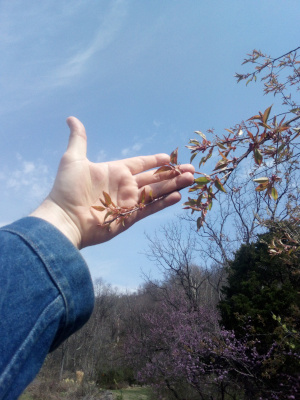
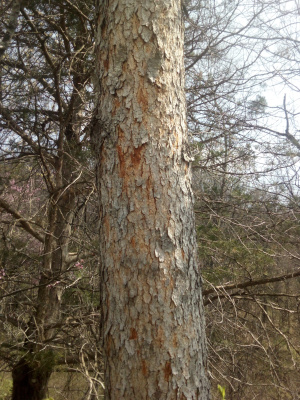
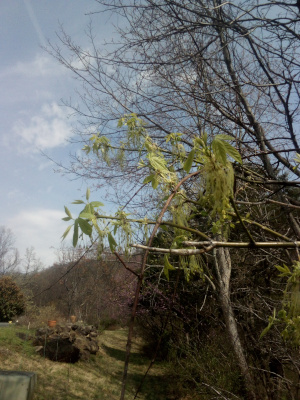
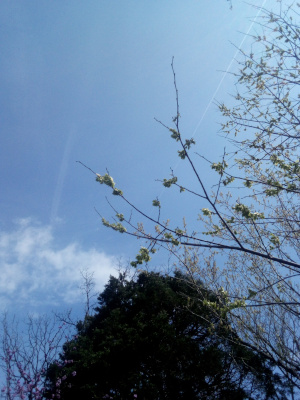
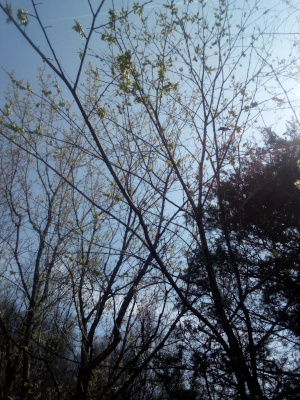
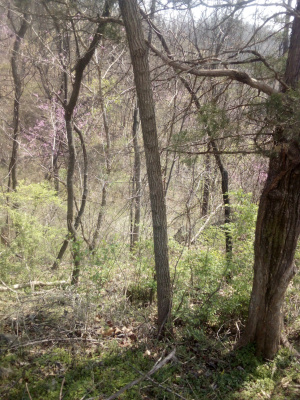
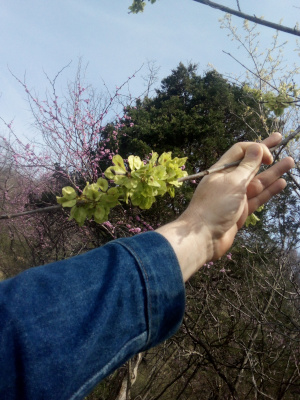
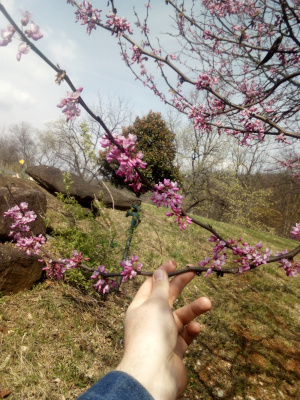
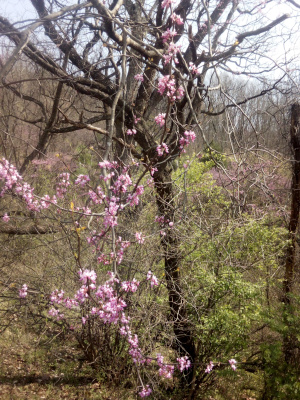
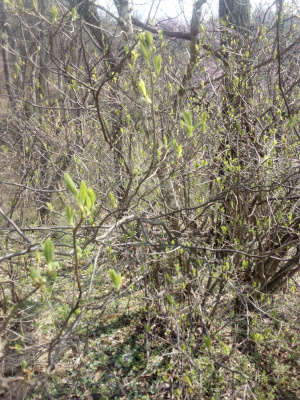
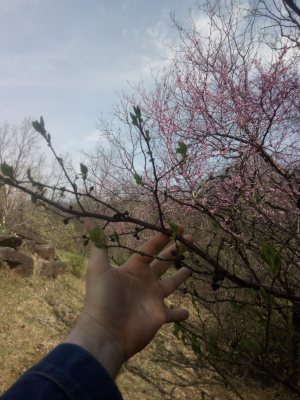
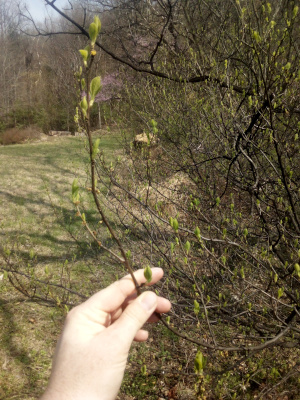
I did some tree identifying again today around the house, and i realized i made a mistake when i posted some tree idents back in May a year ago. It was not white ash. It was black cherry. i have corrected the image name, however i havent fixed the post. it still gives the scientific name for ash. The rest are correct. I did take some pictures today however i haven't had a chance to look at them yet(i will post them another time). here is the post inquestion:
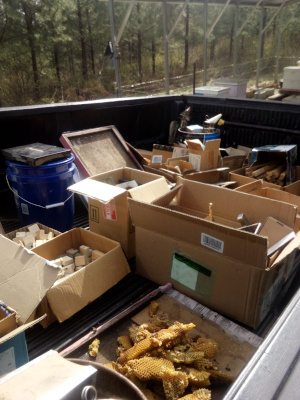
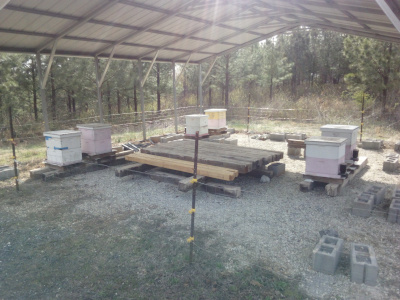
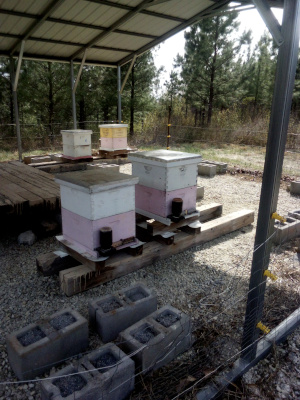
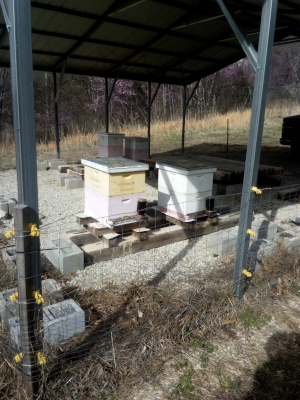
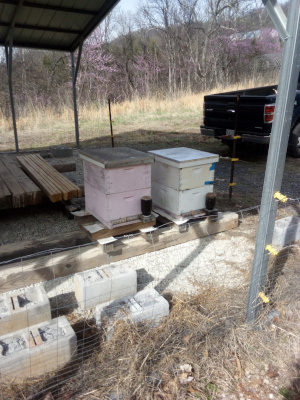
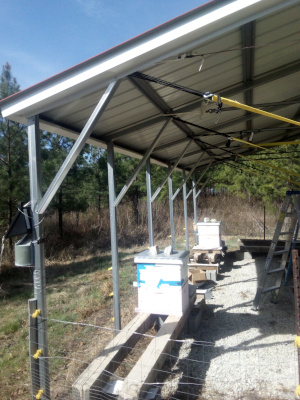
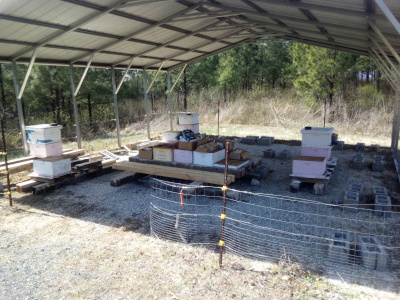
I finally got around to opening up my bees yesterday(Wed-25th). Apparently i had forgotten to remove my little polystyrene slips i put under the telescoping covers at the start of the month. It's not a big deal, but i think in general should remove them earlier in the month. Anyway, i removed them now. Many things are in bloom at this point, including redbud, and i can see little buds forming on the tulip-poplars now. I decided I need to multiply my hives now before the apples are done blooming, since the orchardists tend to start their insecticide operations shortly thereafter in recent years(this is due to spotted-lanternflies attacking the apple-trees). I understand the necessity, however it creates a bit of a death-trap for any roaming swarms, and i have ceased observing Spring swarms in recent years. So, I did succeed in splitting all 3 of my hives i had overwintering. Of the 3 hives, none had migrated into the bottom boxes, though one had deposited burr-comb into the void-space of my upper-landing-board. I did observe hive beetles and one wax-moth larva while i was working on the hives over the course of the day. Otherwise, all three hives appeared healthy. We even spotted the marked queen installed last year in the hive on the north side of the enclosure. Unfortunately, The cross-comb was too severe on the 2 south-side hives to be able to separate and examine all frames(or find the queen), and so i did a more crude operation of splitting each hive in into 2 halves(5 frames each), and placing each half into the respective new hives. The bees were relatively gentle, though i did notice a few stingers in my clothes at the end of the day. This was understandable given I was cutting into comb with a knife. Also, the hive on the south-east corner did appear to be somewhat more reactive than the others, though my hood and double-layer of shirts did a good job at preventing any stings from getting through. I did have the smoker lit in the background, though i didn't blow any smoke on the bees themselves. So, at this point, all hives are now completely filled with either live-comb or new empty frames which i have repaired with wiring and wood-shims to help guide the bees as they build new comb going forward. Thanks to my dad and sister for assisting me at various point throughout the day while i worked! Here is a little text-map of the new configuration of my bee-shed, and also some pics(my sister did take some pictures during the operation, though i personally had my hands full, and so these are just some pics from the end of the day. Note, I am feeding the bees sugar because my number of hives is scary-low right now. I don't plan to feed them anymore for Spring, and pretty soon now, everything will be in bloom, so they shouldn't need it. I just wanted to give them a little boost now. Hopefully they do well this Spring and come the end of June i will be able to split them again, and maybe harvest some honey at the same time.): Note, i did feed the bees over this winter. I was feeding leftover yeasty honey, however i had some troubles with it crystalizing and not flowing out of the jar. i had to modify the lid with a larger hole so the bees could crawl into the jar to reach the crystalized honey. when you do this it is also necessary to cover the jars with something opaque so the bees don't get stuck in the jar and die. This is what the brown bags are for in some of the previous picture Also note, I am switching away from my bee-benches. I have yet to design and build the new hive-stands, but the benches are no-more(sort of), and so the map of the bee-shed will look different going forward.
Mar/25th/2026

                 west
  • - - - - - - - - - - - - - - - - •
  |    _                            |
  |   [2]n                          |
  •   | |                           •
s |   [2]n                          | n
o |   |_|                      _    | o
u •                           | |   • r
t |                          i[2]   | t
h |                           | |   | h
  •                          i[2]   •
  |    _                            |
  |   | |                           |
  •   [2]i                          •
  |   | |                           |
  |   [2]i                          |
  • - - - - - - - - - - - - - - - - •
                 east


i = italian heridity
n = native(local) heredity

hopefully, my new hives succeed. i am relying on the bees to raise new queens.
perhaps i will swap the boxes to confuse the bees a bit and promote the new hives.
I bumped into some MAGA friends the other day, and they were raising a stink about Spanberger and her "Big Tax Agenda". I had not heard about this yet, and it ended up being a bit cold this morning, so i decided rather than working on the bees i would do a bit of researching to get to the bottom of the issue: First one, it appears most of the so-called bad bills in question are not actually in danger of passing, or never made it out of committee(i.e. they will not get voted on and are in no danger of becoming law)[6][6]. At the same time it does appear some bills are progressing[9]. Not sure i have time to look at all of these, however at first glance it appears most of the tax hikes will only affect top earners(i certainly won't see a change in my taxes). For starters, at the top of the list, the proposed new investment income tax will only kick in for earners of $500k and more(actually it looks like this was tabled, so we can forget about it)[10]. It looks like most of these other bills won't decided(continued) until 2027(click the links: "Continued to 2027"[9]). So basically, some of these will genuinely be issue for debate in the coming year, though now is not the time for a public freakout. In other news, it does look like the legislature is trying to figure out the budget and decide on things like rules related to data centers[8][11]. I can't resist to give my 2 cents, though i'm sure it will get forever lost in the weeds here on this mini-blog, that is, there is a real concern related to data-center proliferation if you are at all aware of current trends with Tech and what-not. Even considering this looming disaster, at the same time, it is important to continue providing incentives for proven business-friendly technologies. There is an increasingly dangerous trend developing in Tech with unproven AI taking over the whole sector, and there is a real danger of AI ruining society as well as trashing the environment if left unchecked. Obviously the hype has outpaced sensible business practices, and something muse be done. At the same time, the old tech that has already proven itself to be useful must be protected from potential legislation aimed at AI. The big question is how do you mitigate AI legislatively without affecting conventional tech-business which also operates in data centers? What does AI use, or use more of, that regular data centers don't? The answer is power and water[1]. Conventional data centers are air cooled while the new data centers for AI increasingly use water cooling methods[2][3][4][5]. In short a consumption tax is probably a good idea, though perhaps it should be a tax on water consumption instead of just on energy, and perhaps it should be tiered so as not to affect lower power sites while maintaining a full effect on the biggest offenders. Worth thinking about: data centers are noisy water hogs[1][12]. Don't get me started about what a horrible pile of crap AI really is for business and society[14]. Talk about FOMO[13]! [1] [2] [3] [4] [5] [6](feb/5th) [7](jan/30th) [8](mar/12th) [9](jan/20th) [10] [11](mar/20th) [12] [13] [14] There, i think i'm done now. i got to get outside and work on stuff!
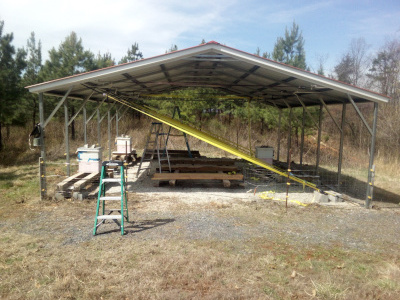
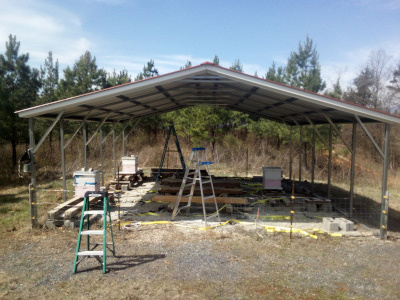
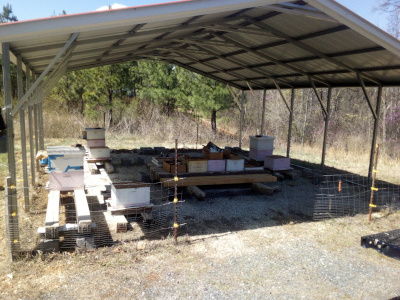
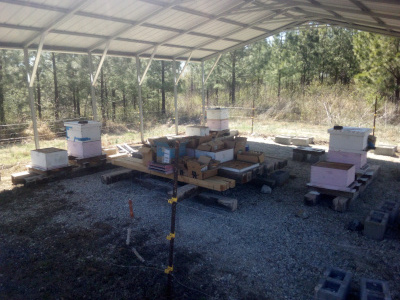
Well, i finished my repairs to the bee-shed yesterday(with some help), and today i started prepping to do my Spring bee inspection and hopefully some splits, but then i realized i needed to run to church to help with food distributions. I'm planning to get back to the bees tomorrow morning. This is probably better anyway because my dad will be free so he can hold the smoker for me. Also, it's supposed to be less windy and colder, bees will be less active, and the smoke wont blow away so fast. I had some bees from one hive rush me today after i moved them a couple feet to a temporary platform. I was wearing my hood, so no stings today(it is not fun getting stung). I moved the bees because I am planning to switch away from my 6x6 bee-benches to individual hive-stands. I still have to design the new stands, but i am thinking i might try molded concrete. Whatever i decide it basically needs to get the boxes up off the moist ground, and also deter ants from crawling up into the hive.
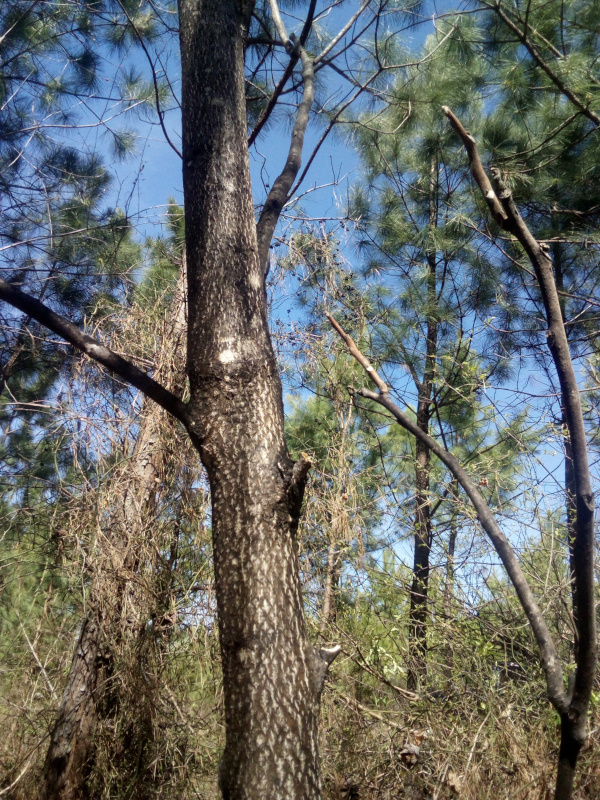
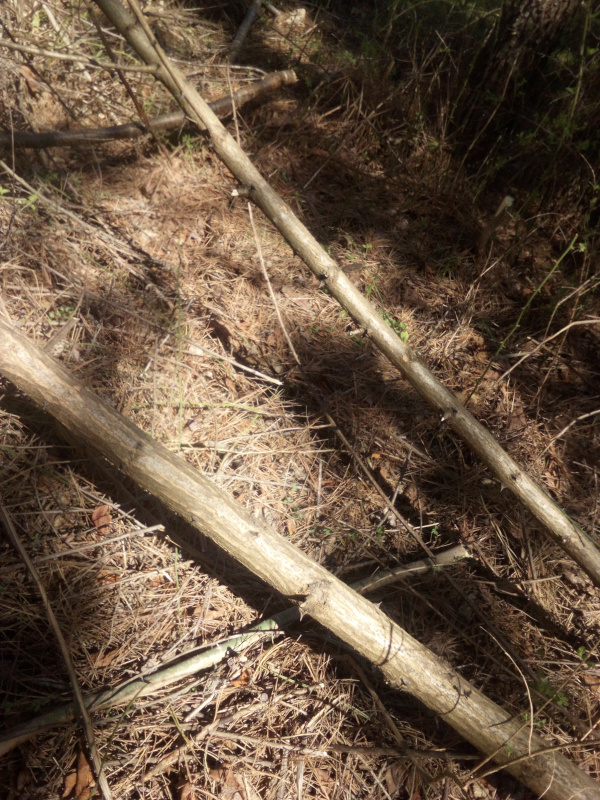
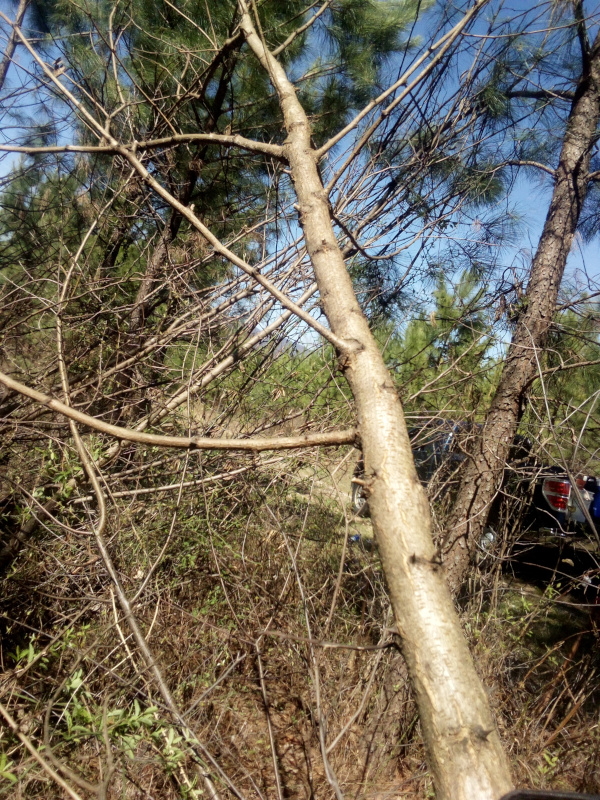
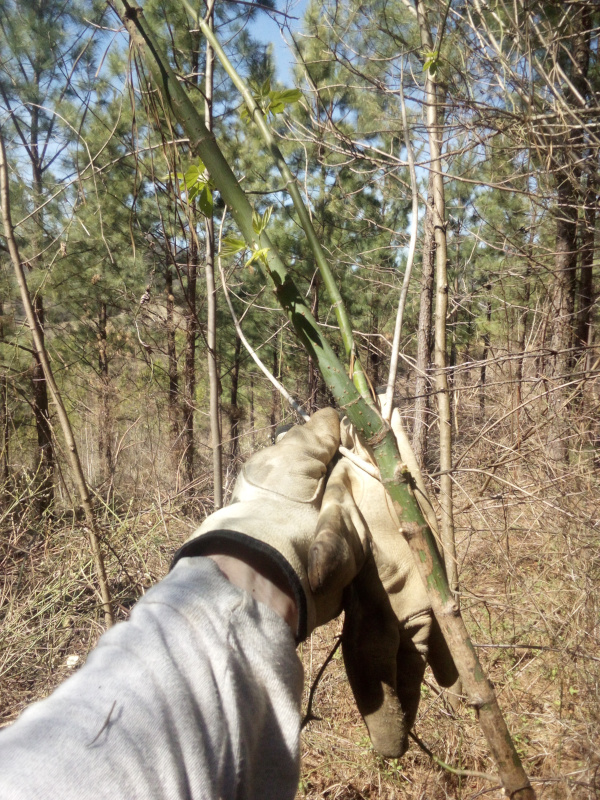
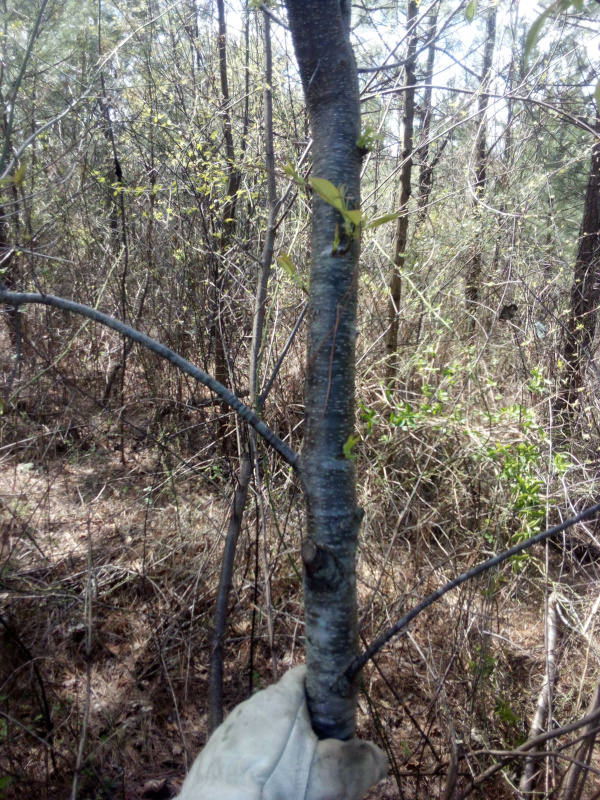
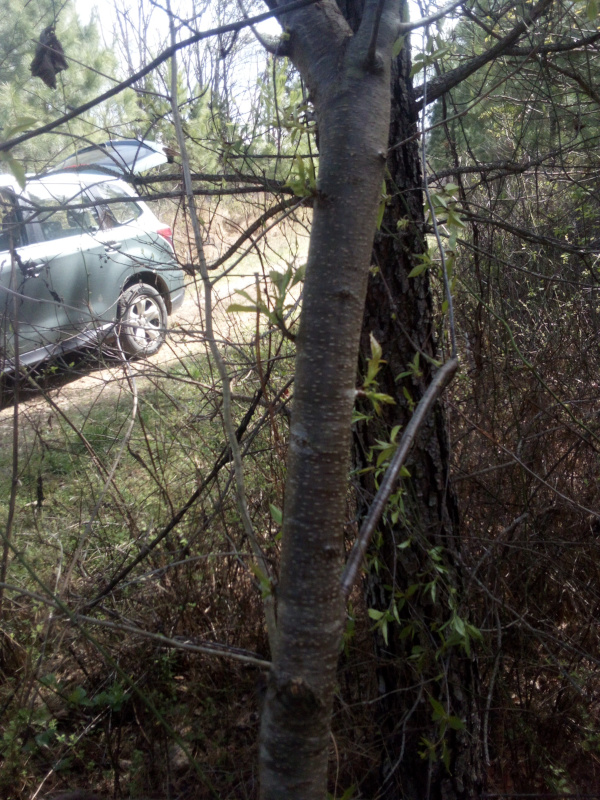
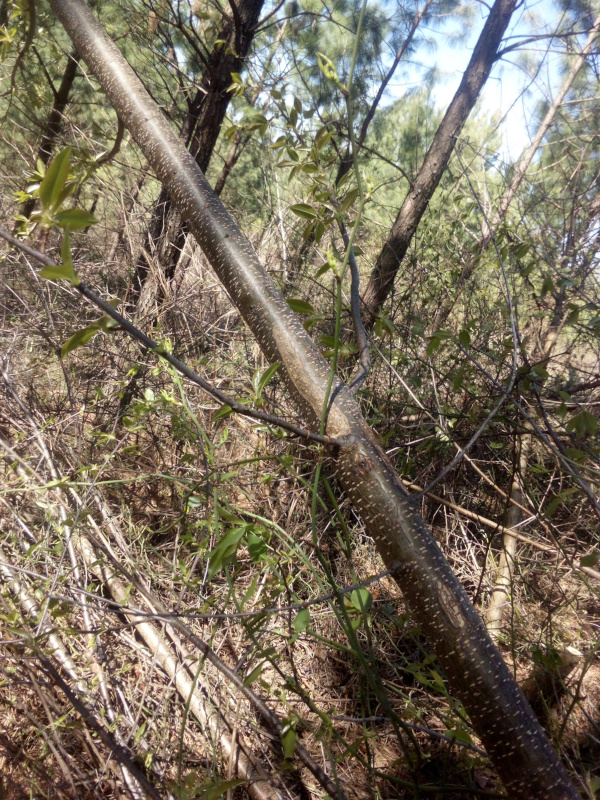
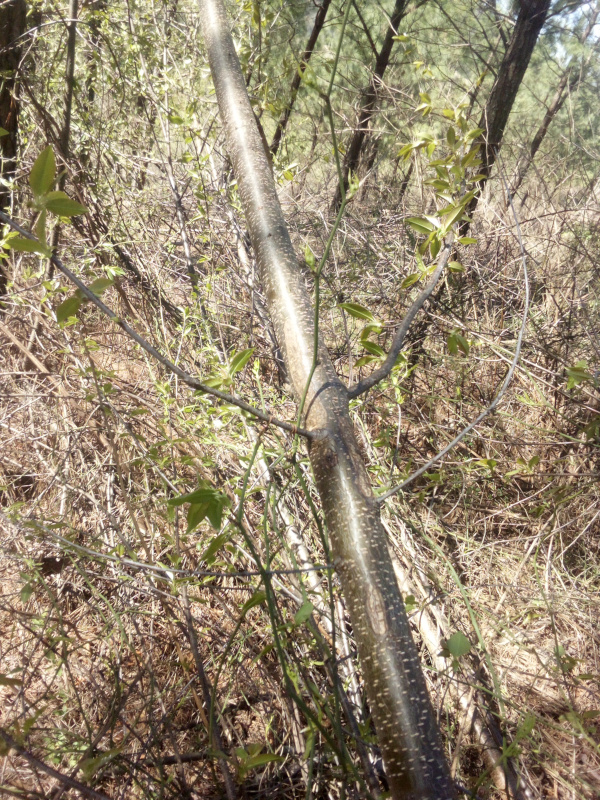
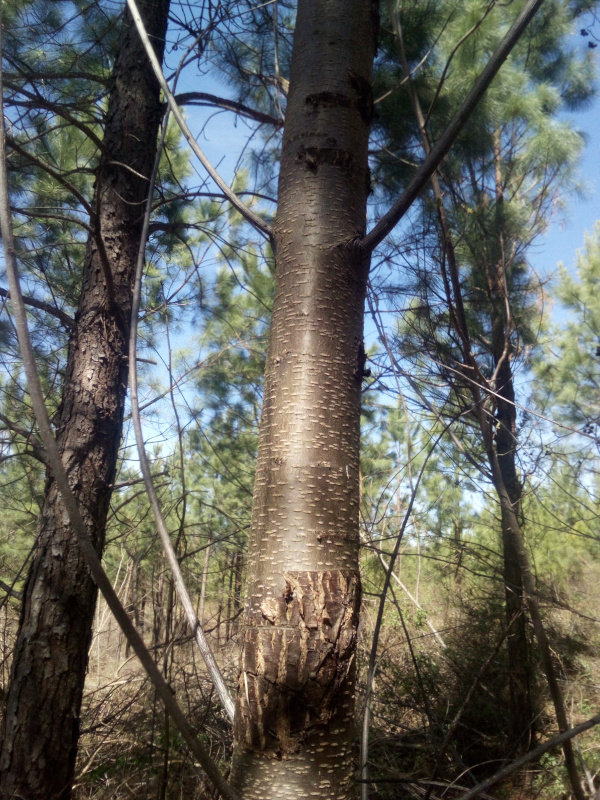
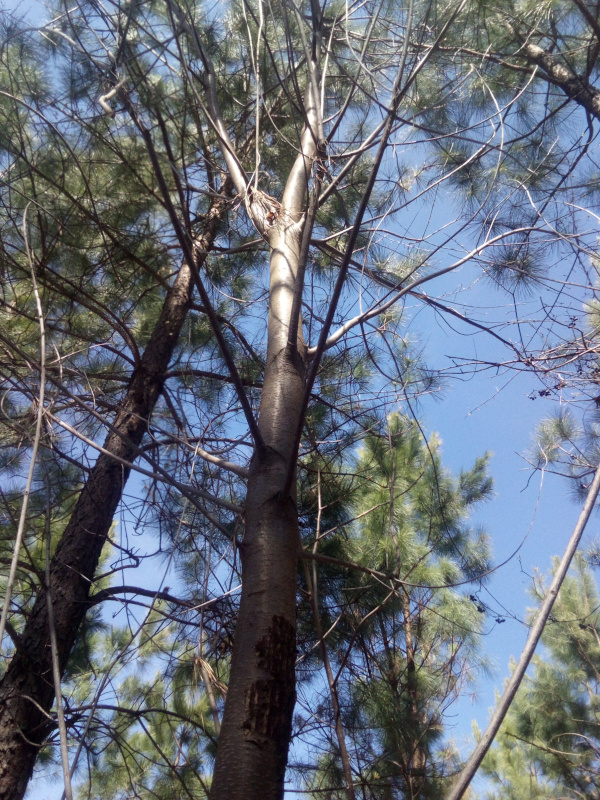
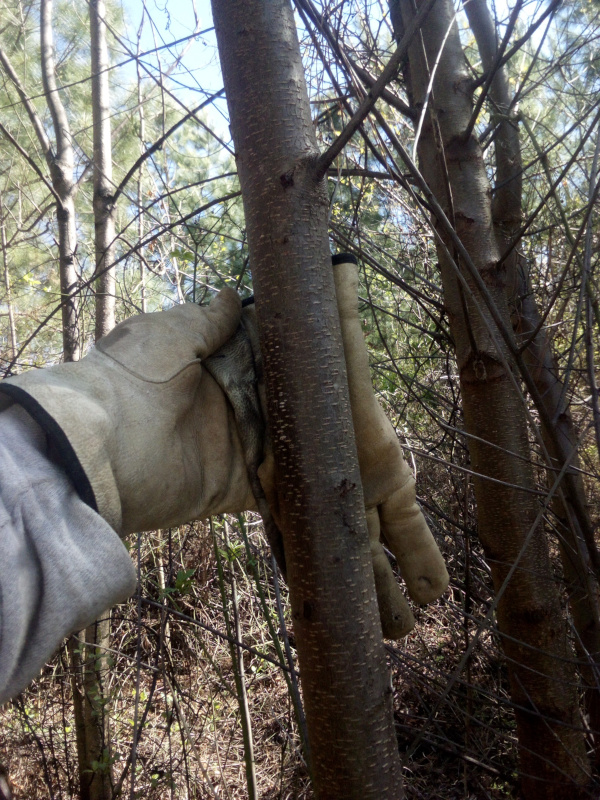
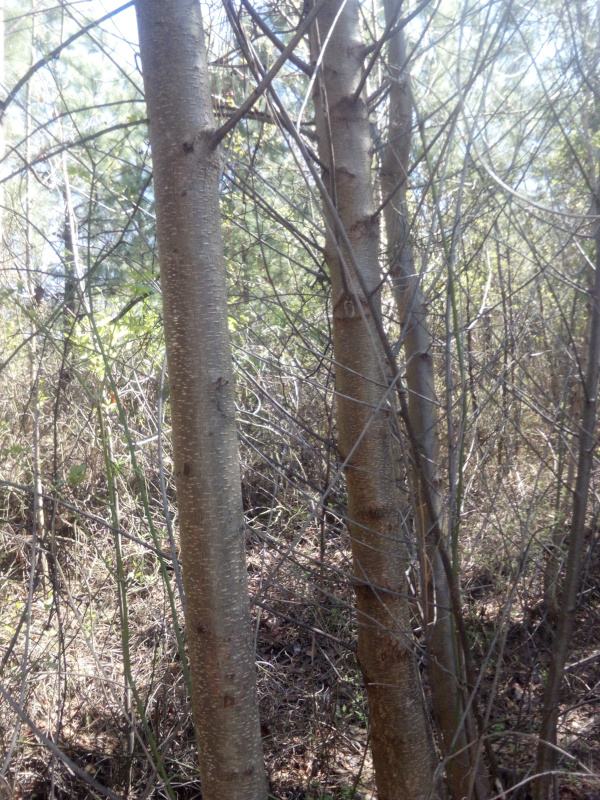
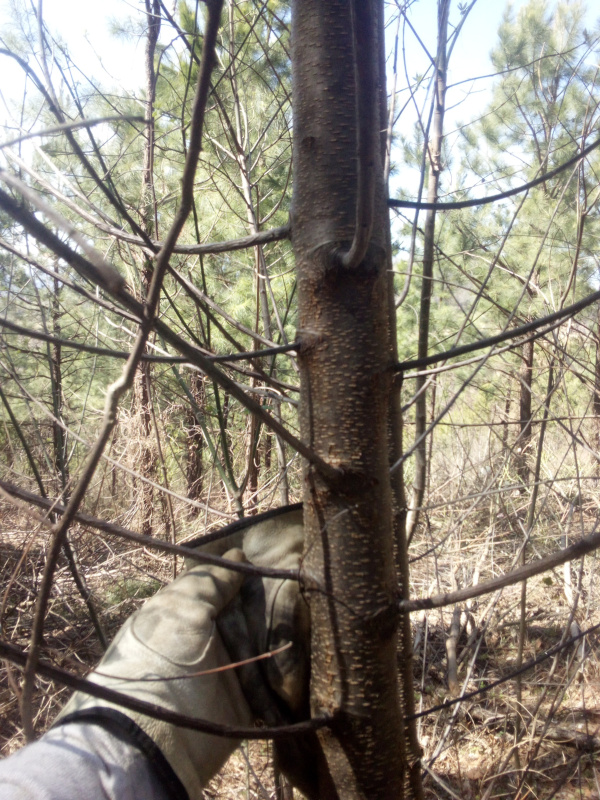
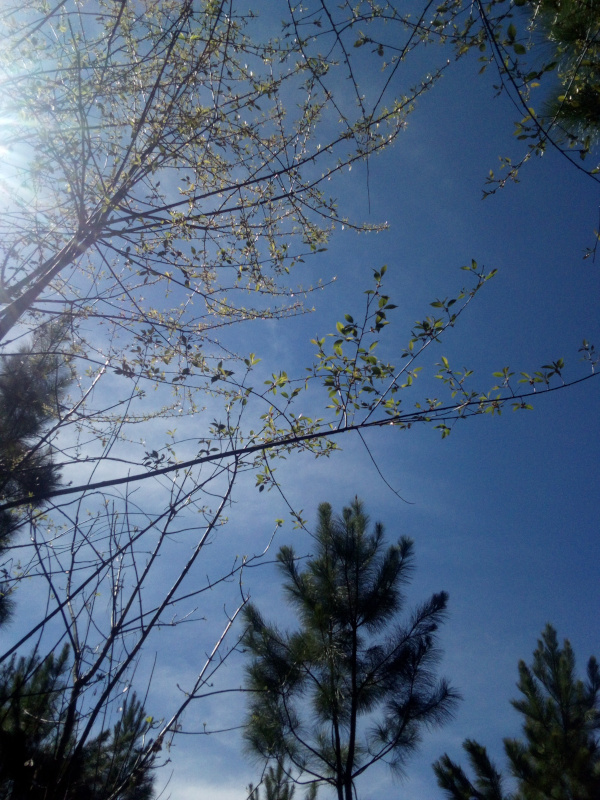
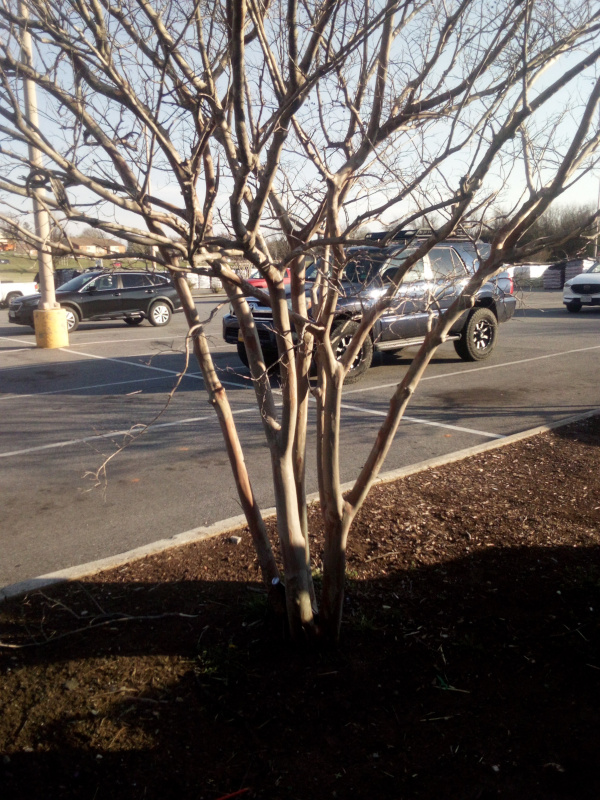
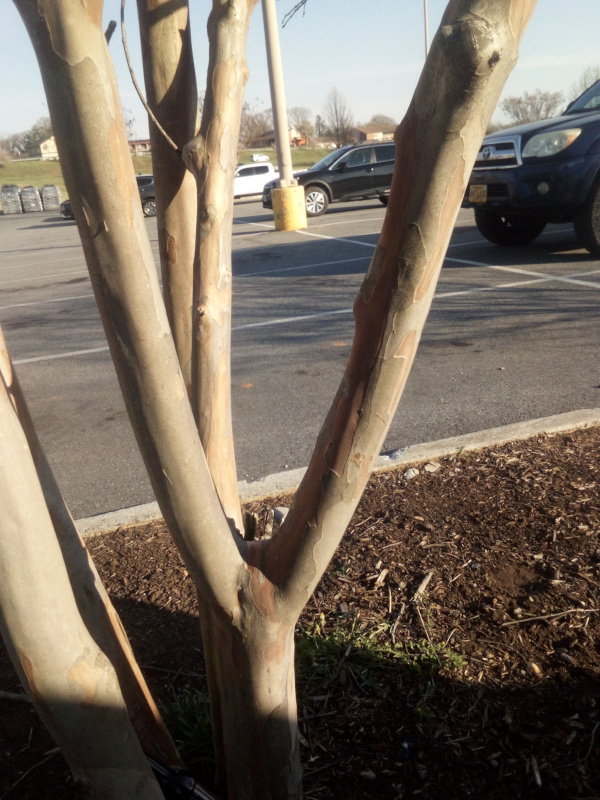
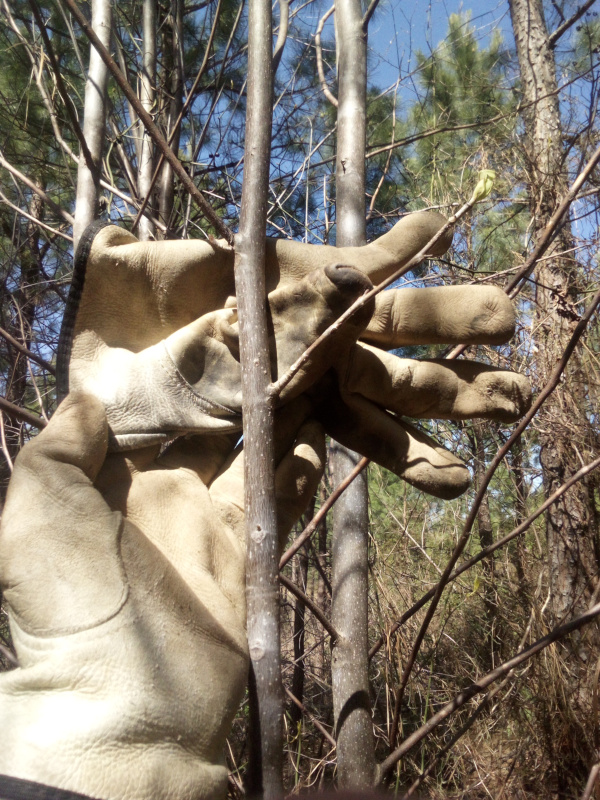
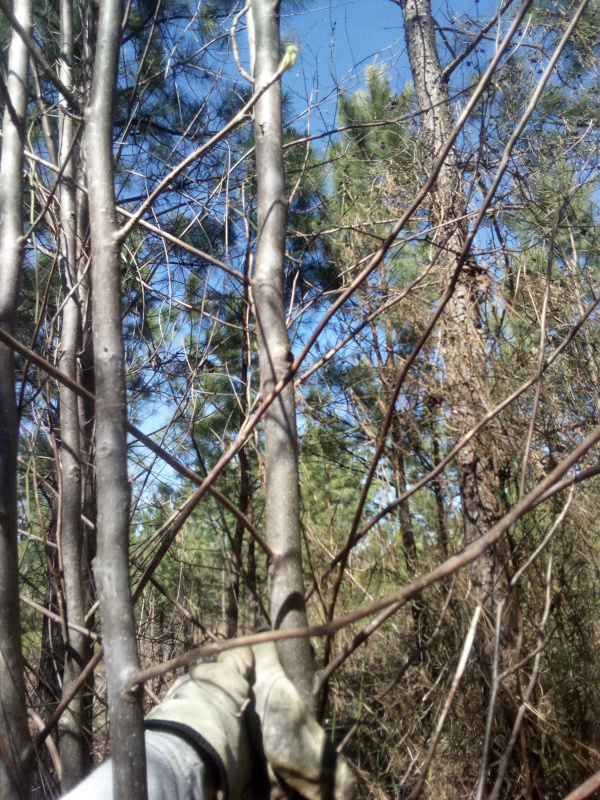
Also, here are some pics of trees i found(and later identified) while working in our pines(loblolly). Sadly i found some nice trees growing in the wrong spot, though there were also some all-around bad trees too, so i guess it evens out. i also couldn't help identifying the crapemyrtle in the Lowes parking lot.(click to zoom + ident)
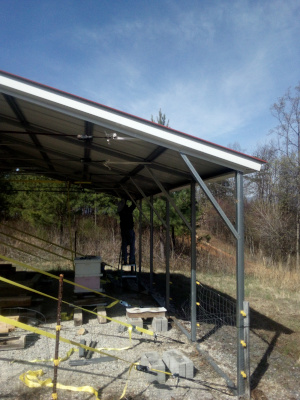
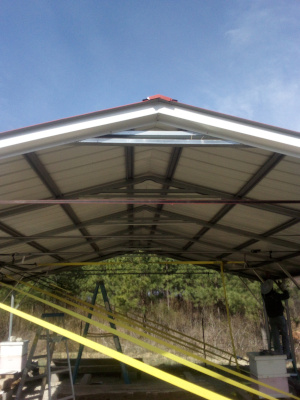
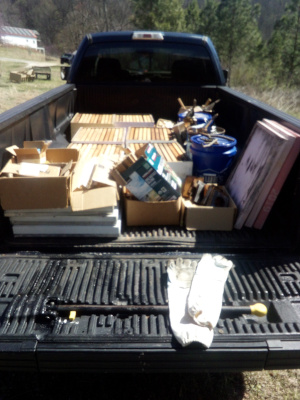
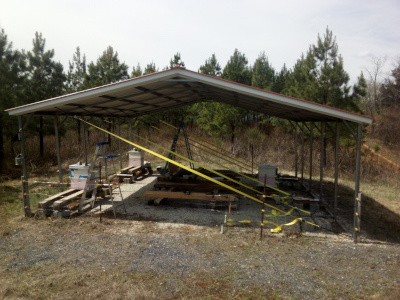
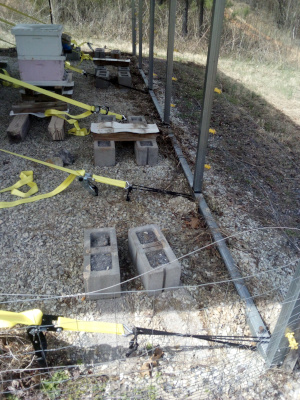
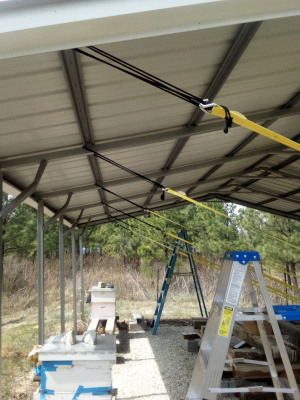
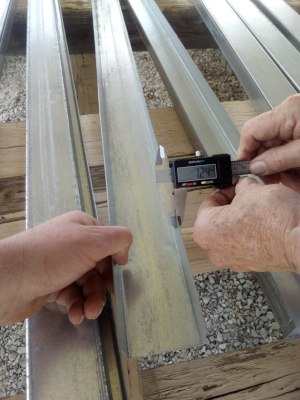
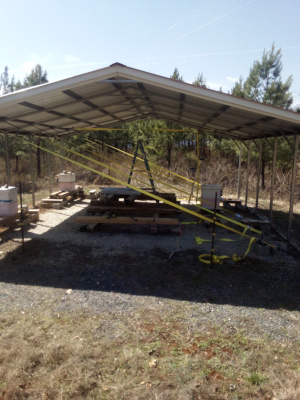
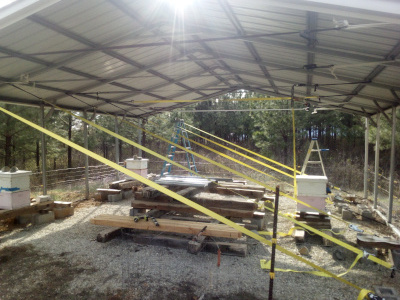
Well, i got all the straps on my bee-shed today to try and pull it back into shape before replacing all the collar ties and roof-corner braces(it got a little scrunched-down by the snow this winter). The bees started out very gentle this morning, but as the day warmed up, and i became more sweaty, they began to show more interest in me - i even got a small sting on my wrist! I think this is all i can do for today. Hopefully we can finish it tomorrow(Sunday). I just need to finish measuring with the level and tightening the various straps, and then it is a matter of simply bolting on the new support members. It is also past due for me to split my bees. The redbud and spicebush is in bloom, as well as apples. The orchardists will begin spraying again as soon as the apples are done blooming, and then it will be a deathtrap for any of my bees if they decided to swarm in search of a new hive. I was late last year and one of my hives already had swarmed by the time i got around to working on them. I also made the mistake of not doing a proper inspection last year and most of my early splits failed. I plan to get the knife out and do it properly this year. Hopefully i will overcome my cross-comb issues once i get enough of my newly wired frames out in use. It appears increased spraying is the new way of doing things(at least around here). Hopefully i can make things work in spite of this new fact of life. I don't think i will be catching any swarm in Spring any time soon. There was also some funny business with the replacement parts. They were actually not the lengths we ordered when we went to pick them up. And then when i was comparing them to the old parts today it appears that they gave us the same thin gauge steel that the old parts were made of. It seems like maybe sales doesn't talk to the factory? Anyway, i guess it's still worth it just to put the part on for now. The replacement components are somewhat longer than their respective originals. I guess this will make it a little better? i'm kinda ticked off.
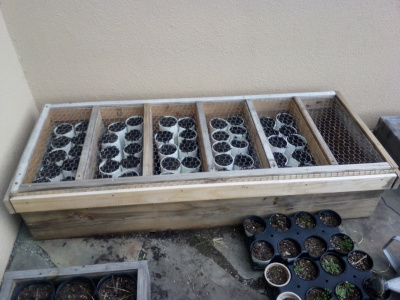
Saving this here. i think i should review something like this given my recent self-suturing adventure. Every Suturing Technique - LIVE Surgeons Secrets 2025 btw, i was sort of surprised how i got talked out of a suture at my GP. is this something they don't do? the thing was flapping open every time i closed my hand. it needed a suture. I probably also should have had a bigger bandage. i couldn't help using the hand, and ended up ripping out my stitch anyway. at this point i have a nice little scar and a numb patch on the hand now. in good news, i did get my chestnut potted yesterday. hopefully, my special lid keeps the squirrels out, and i get some sprouts! now off to the big job for today: repair my semi-crumpled bee-shed - this year's snow was a tiny bit more than it could handle. p.s. most of the techniques are too hard for DIY i think(especially one-handed). also, i am totally aware i am not a doctor, and probably did something wrong. i knew right away i wasn't going to ER because it is too expensive. i was sort of surprised that they sent me home from my primary care without suturing and a larger bandage. maybe it's because i smelled bad? i don't like it when people smell bad either. in my defense, it is hard to shower with an open wound.
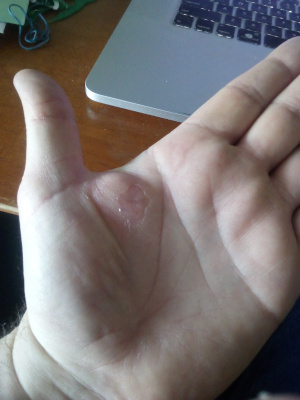
also, you would think this is not a very useful skill to have given modern medicine, however this is the second time i have had to do this for myself(oddly both were on the left hand). i think i did better this time getting the stitch through at a good depth, however i guess it still was not good enough and the stitch ended up pulling through after a day(i proably shoudn't have been using the hand so much).
Well, i'm pretty sure i have a mild form of covid(though i think i will skip sticking the brush up my nose): body-aches, sleeplessness mixed with tiredness, burning sinuses, supposedly someone had it at a party my mom went to... it probably didn't help that i found myself down in my icy-cold and dirty place down the hill late last night, and decided i felt too tired to come back up to sleep... i guess it's not that bad. still i don't feel like doing much today. I did see an interesting thing yesterday about ACM awarding The Turing Award for quantum information science(to the winners Charles H. Bennett and Gilles Brassard): I have not been too impressed with pop-science media's coverage of "quantum-computers" in recent years. i generally get the impression from such coverage that the whole thing is a bit fakey, and at the very best severely misrepresented. The fact that ACM awarded a prize for anything involving the word quantum in it peaked my interest however, and as i understand it as of reading up a bit more, the award does not really indicate any new development in something like quantum-supremacy per se, but rather a lifetime achievement in defining the big problem around quantum computing, as well as some experimental work in encoding and transmitting quantum info(noise?) for use in cryptography applications(hope i got that right). I never got too in-depth into anything quantum during my college days beyond the basic coverage from the some introductory courses i took when i initially thought i might major in chemistry and before i switched to CS. I remember we did talk a little about quantum computers in a theory of computation class i took, and googling about it now, it looks like companies like D-Wave were already building prototypes at that point, however as i recollect it was a few more years before companies like IBM declared "quantum supremacy", and even that seemed kind of anti-climactic at the time. *Correction, D-wave and the initial IBM project were sort of debunked and underwhelming. here is a timeline: > Google had announced plans to demonstrate quantum supremacy before the end of 2017 with an array of 49 superconducting qubits.[30] In early January 2018, Intel announced a similar hardware program.[31] In October 2017, IBM demonstrated the simulation of 56 qubits on a classical supercomputer, thereby increasing the computational power needed to establish quantum supremacy.[32]... I seemed to remember something about a simulation of quantum computing making the news. That probably why i thought it was all fake. ...it also looks like my memory was correct about D-Wave being a dud: > A research team led by Matthias Troyer and Daniel Lidar found that, while there is evidence of quantum annealing in D-Wave One, they saw no speed increase compared to classical computers. They implemented an optimized classical algorithm to solve the same particular problem as the D-Wave One.[50][51] worth saving here: > A 2023 Communications of the ACM article[94] found that current quantum computing algorithms are "insufficient for practical quantum advantage without significant improvements across the software/hardware stack". It argues that the most promising candidates for achieving speedup with quantum computers are "small-data problems", for example, in chemistry and materials science. ...small-data problems, does this refer to improvements in sensors? this would jive with how i understand the current situation. i found a relevant tid-bit here: > Charles H. Bennett, Ethan Bernstein, Gilles Brassard, and Umesh Vazirani proved that any quantum solution to the problem needs to evaluate the function Ω ( N ) {\displaystyle \Omega ({\sqrt {N}})} {\displaystyle \Omega ({\sqrt {N}})} times, so Grover's algorithm is asymptotically optimal.[2] Since classical algorithms for NP-complete problems require exponentially many steps, and Grover's algorithm provides at most a quadratic speedup over the classical solution for unstructured search, this suggests that Grover's algorithm by itself will not provide polynomial-time solutions for NP-complete problems (as the square root of an exponential function is still an exponential, not a polynomial function).[3] ...so, no silver bullet here(specifically symmetric-key cryptography). here is some HN commentary on the big event: 2025 Turing award given for quantum information science (acm.org) also, good post(and shorter, also from the HN post): So, in short, i probably need to do more reading up to really understand what all this means as far as the field of quantum cryptography, however it appears this award is not at all an endorsement of the idea that quantum computers are going to turn the world on it's head any time soon(maybe never). further reading: (again) p.s. i really hate the term “teleport” in relation to quantum science. i guess they just mean the conveying of something(like a photon) through space, however the lay-interpretation would lead you to believe that somehow we are breaking Einstein's law(which is actually a theory): the theory of special relativity. Still, I am pretty sure no one has disproven special relativity yet. got to go now!
Sorry this ended up getting a bit long, and it this point I don't want to take the time for editing. i need to just post this and get on the the next item on my list. Btw, i probably wouldn't have done this latest investigating into voting methods if not for the kind people at GIMP-Forum: Anyway, here goes: I thought i should do a little more investigating into the latvian voting system listed on the approval voting wiki. I was not aware previously that anything like this existed. It appears that it is like an approval method fit within a greater electoral system: "...The Latvian parliament uses a modified version of approval voting within open list proportional representation, in which voters can cast either positive (approval) votes, negative votes or neither for any number of candidates..." "...[Latvian parliament]Seats are distributed in each constituency by open list proportional representation among the parties that overcome a 5% national election threshold using an unmodified version of the Webster/Sainte-Laguë method. Voters cast a vote for a party list, which consists of the candidates that the party has submitted in that constituency. Although a specific ordering is listed for each candidate, which is determined by the party, this has no effect on the actual chances of each candidate. Instead, voters cast "specific votes" for candidates. These votes can be either positive votes or negative votes. The number of votes for each candidate is determined by taking the number of votes for the respective list, and adding it to the candidate's positive votes, before subtracting the number of negative votes for that candidate. The candidates with the highest number of votes fill the party's seats. A positive vote is indicated by drawing a plus sign (+) next to the candidate's name on the ballot paper. A negative vote is indicated by crossing out the candidate's name. Voters may only cast specific votes for the candidates on the list that they voted for..." So, it is similar to approval in the ability to express approval/disapproval for multiple candidates, however voters are still restricted to only voting on the candidate list from the party they have chosen. I feel like this is basically the proportional analogue to if an Approval Party started running primaries here in The States, using approval method with the winners going on to participate in the general elections. It seems like this should be an improvement over a closed-list system, however it still seems like you are restricting voters from expressing their full preference by requiring them to only vote on a single list of candidates(similarly to primary system here in the USA). Some may argue that asking voters to vote on every candidate might be overwhelming, however if the goal is simply to narrow the field, perhaps having a second round could serve that purpose, while also allowing voters to express their preferences on candidates from every party. --------------------------------------- At the risk of junking up this post with a tangent, I think i may have identified another possible contributor to our increasingly polarized politics here in The States. I am young enough that i don't really remember a time before open primaries. "...Opponents of the open primary believe that the open primary leaves the party nominations vulnerable to manipulation and dilution. First, one party could organize its voters to vote in the other party's primary and choose the candidate that they most agree with or that they think their party could most easily defeat. Secondly, in the open primary, independent voters can vote in either party. This occurrence may dilute the vote of a particular party and lead to a nominee who does not represent the party's views. There is, however, little evidence of manipulation actually occurring,[citation needed] but there have been occasions when independent voters have an effect on the outcome of a partisan primary..." This is certainly something i have thought about a lot as an independent voter, and it is my personal perception that many people will switch between parties strategically, and there have also been numerous cases in more recent years of campaigns spending money to promote perceived weak opponents in the opposing party's primary[i will have to find citations later]. Here are the links to the court cases on open primaries: Washington State Grange v. Washington State Republican Party - 2008 California Democratic Party v. Jones - 2000 I also find it worth note that we have not had as many independent and 3rd-party legislators since around when they legalized open primaries. It is very evident in the Congress data, with no independent congressman since 2007: Senate data seems harder to decipher: Supposedly their are currently and have been recently various "independent" senators, however upon further inspection usually they are career politicians, and have formerly been a member of a major party, and still caucus with that party(mostly this appears to be Democrat from what i can see recently) see wikipedia: i would need to do a more thorough investigation to get a definite assessment on this, however at first glance it appears that the old data does seem to match what i remembered from college when we did a unit on analysing election data for an intro to computer science class i took. In addition the numbers for recent years seem to match what i personally have perceived that success has become more difficult for candidates outside of the two major parties. Looking further back, it appears Ralph Nader got his start as a Democrat. Perhaps this is the way it has always been? Also, Bernie Sanders was once up a time the lone Independent congressman in the 106th Congress(1999). i'm kind of surprised given he almost won the Democratic presidential nomination back in 2016. turns out he wasn't a Democrat until recently. I guess you learn something every day. Does this refute my thesis? I need to do more research for this one. I still feel like my general intuition is valid with people like Angus King, Kyrsten Sinema and Joe Manchin all supposedly being independent but still members of The Democratic Caucus. Bernie Sanders is also a member, however unlike the rest he was not originally a Democrat. He is also an example of trend in Congress with Independents from the time period i mentioned from 1991-2007. Anyway, it's funny, before looking into this, i had mis-remembered the definition of "open primaries". Turns out we already had them as of a long time ago. I guess the correct term for what i was thinking of is a nonpartisan / jungle primary, and we have been seeing some of that recently: "...The top-two system is used for all primaries in Washington and California (except presidential primaries). Alaska has used a highly-similar top-four primary with a ranked-choice runoff since the 2022 House special election..." It's sad to see RCV poisoning the well for election reform. What to do? last thing before returning to my comparison of the latvian parliament and approval voting, i am aware of Ross Perot who was active politically during the timeframe in question. Interesting, "...[Perot]was an angel investor for NeXT.." Very Cool! --------------------------------------- Anyway, back to the subject of the Latvian Saeima. supposedly they use an open list vote, and a webster apportionment. "Open list describes any variant of party-list proportional representation where voters have at least some influence on the order in which a party's candidates are elected. This is as opposed to closed list, in which party lists are in a predetermined..." "The Sainte-Laguë method, also called the Webster method (French pronunciation: [sɛ̃t.la.ɡy]), is a highest averages apportionment method for allocating seats in a parliament among federal states, or among parties in a party-list proportional representation system..." pretty simple stuff not related to approval method, but perhaps worth skimming to understand nuance in variants of proportional representation. *** i feel like i should include the detail that here in the USA we us direct elections to choose all our representatives: proportional representation is foreign to Americans, however there is the similarity that we also have political parties(though fewer of them i guess). *** So, I think at this point the question is how does an open-list proportional vote compare to a pure approval method? I'm running out of time(and my hand is beginning to feel a bit better, and i'm recovering from the intestinal distress i had yesterday*antibiotics*, so i should probably get on to some of my chores i have to do around here), but here are some notes i was working on before i decided i had to get going and do something else: "...There are five commonly cited criteria (called universality, non-imposition, non-dictatorship, monotonicity, and independence of irrelevant alternatives) for "reasonable behaviour" of an election method. But it has been mathematically proven that no single-winner election method can meet all five of these criteria, so one can always invent situations where a particular method violates one of these criteria. Thus, presenting individual cases of strange behaviour proves little. A more substantive way to argue for or against a particular election method would be to compare how frequently failures occur, under what conditions they occur, and how severe they are..." I should probably cover Arrow - here are some quick wiki-links on Arrow: It's kind of a mouthful to pars the math-language / symbology here. As i understand it, the gist is that an impossibly good election method is all of the following(but this is impossible): 1. Be deterministic(i.e. mathematically a system, process, or model where the output is uniquely determined by its initial inputs and operating rules - not randomness). 2. Be complete, in that all outcomes are possible given a corresponding set of voter-preferences(look up Set Theory). 3. Be not the result of a single person's preference. 4. Be consistent in the relation of voter preference to expected outcome(i.e. expressing greater preference for a candidate should not decrease their chance of winning). 5. Be not affected by the presence of 'irrelevant' choices(i.e. candidates with no realistic chance of winning). I'm not sure if i got that 100% correct. I think the issue is that Arrow was specifically talking about a system where you consider all possible voter preferences as expressed by "transitive and complete" orderings of candidates(look up Binary Relations). The job then is to devise a cumulative preference ordering for the whole population where by all the following are fulfilled(this is impossible): 1. for any two candidates a and b, it is possible to exist a cumulative preference for which the result favors candidate a over b. 2. the result is not decided by a single voter's preference. 3. the relative order of two candidates a and b in the result is always the same as it was in the domain(i.e the cumulative preference of the population - what does that even mean?). further reading(no time!): Sorry, i'll have to finish later! My goal with all this is to find a kind of in-between voting method with properties of both Approval and either Direct or Proportional voting, which would lead to results with Approval type outcomes but also preserving aspects of the traditional methods. I think there needs to be a half-measured path to help society move from the old systems(FPTP, STV) to new(Approval). p.s. since i'm already counting the years for my busted finger, i think i'll also take the opportunity to commemorate the upcoming 14 year anniversary this summer of my terrible accident and resulting incurable IBS. when will the doctors fix me? I don't want to take funny pills that don't work and give you bad side-effects. I have also lost my confidence in surgeons at this point. i guess i will just live with this until i die. ...maybe i will invent a new kind of toilet? does that seem realistic?
Well, i got my last post a little wrong. The Approval Voting Party has been around for 10 years now, though it hasn't seen much progress outside of Colorado and a few selected states. I guess that explains why i haven't come across them before. Here are some links: related: ...I kinda wish Approval Voting Party would choose a different acronym: AVP = Anti-Violence Project, Alternatives To Violence Project-USA, Association of Volleyball Professionals, AVPcap(independent global investment platform), Alien vs. Predator I have a similar problem with The Center for Election Sciences: CES = Consumer Electronics Symposium, Council for European Studies, Center for Economic Studies, Cooperative Educational Services ***this is poor branding*** some wiki-links for approval voting as a concept: ...so they banned approval and rcv in north dakota now as of last year Some good starting places for learning about Approval voting: I kind of don't like the use of Bayes' Theorem in relation to voting methods. What is the "magic best winner"? Isn't voter preference multi-dimensional? I guess i just don't get how you can lay it all out on a graph if you can't actually define what you are comparing. In contrast, i find the concept of monotonicity discussed by Ka-Ping Yee(zesty.ca) very intuitive and profound. Bayes links(i think it is still probably useful to think about): i guess i should probably also include Arrow: Finally, i would have included this one further up, however it looks like they redesigned the website so the page doesn't load anymore for me. what are they doing at the election science center?! further reading(tangential): ...so apparently wikipedia doesn't know that Missouri banned approval voting: ...it looks like they made a little carveout for St. Louis, but still, this is kinda sad. Ironically the headline reads "Missouri voters approve ban on ranked choice voting" but it also include banning approval voting statewide. What the hell?! The election science center keeps dropping the ball! ...on a positive note, it looks like cspan is finally accessible to people without a cable/satellite subscription: i look forward to becoming better informed again. p.s. This month is the 9 year anniversary of my big finger injury(mar/2017), and 9 years since the last time i contributed to an open-source project of any note(was it also the first? i need to double check that, i thought there was one other, maybe two?). I'm also still recovering from this latest dog-bite injury(same hand). The wound seems to have closed up now, but i have a couple knots under the skin now where the teeth went in. Also, it appears i now have a numb spot on my palm between my thumb and index finger(near the bite). i guess i clipped a nerve. i would photo-document it, however none of my phone cameras seem to like to focus up close. i need to get a real camera, if not just to do some night-sky photography again. every year there are more lights in the valley. i shouldn't complain since we built the house only 20 years ago now. still, it is kinda sad to observe this trend.

It appears someone has finally started an Approval Voting party:
Well it is a new month, and today is kinda yucky outside as well as it is also the last day of antibiotics for my injured hand, so i'm taking the oportunity to update this blog. Perhaps one day i will take the time to improve the workflow here, but for now it is still copy-paste html template and fill it in. World news is off the chain right now with the new war with Iran! Conversely, my personal development is still somewhat glum lately, with this last week being me just babying my hand and waiting for it to get better. In defence of the doggo, it turned out he had ehrlichiosis and anaplasmosis, on top of his congenital bad hips. He seems in better spirits now after taking the meds they gave him. Now, i only hope we can keep everyone mindful of his special needs so he doesn't end up developing any bad habits. Ideally i remain the only person he has ever bitten, and hopefully it doesn't happen again - we will see. Spring should be happening pretty soon now. The little flurry we had yeasterday quickly turned to rain, and it has been raining off and on this morning. It looks lke pretty much all the ice patches have melted now from our big snow-storm in January. I got so much stuff i got to do. I am so behind schedule on everything. I don't know how this is all going to work out. I guess i will just grovel to mom and dad some more, and maybe next year will be better? Actually, I'm getting a significant pay bump, so who knows, maybe things will get a bit better soon. At least i should have more money to buy materials and not have to worry about having enough cash anymore, though I don't think it will change my overall plans as far as trying to develop a farm business or any of my project plans involving recycled materials. I'm looking forward to being able to use my hand again soon, and getting back to making progress on some stuff. My hand is definitely less swollen - it's been about 7 days now since the bite. Peaking under the bandage there is still some ooze coming out of the two holes. It's hard to see without removing the bandage, but it appears my little DIY staple job in still holding stuff closed, so that is encouraging. Anyway, I think that is all for today. Hopefully the hand will finish healing, and i'll start getting stuff done again, and maybe even get some time to work on some of the Web stuff i want to do. p.s. ***reminder to self: i still need to renew my SSL cert for tinkerlandfarm.com!